Search:: Artists Alphabetically Artists by Country Artists by Century Artists by Movement
You are here history of painters >Rococo > Goya
Francisco Jose de Goya
1746-1828
One of the Greatest Painters Of All Time
Spanish Rococo Romantic
Painter
Artistically Influenced by the Following Painters and Art Movements: Velázquez, Rembrandt, El Greco
Education - at age 14 apprenticed to painter Spanish Jose Luzan
Cause of Death - Old age
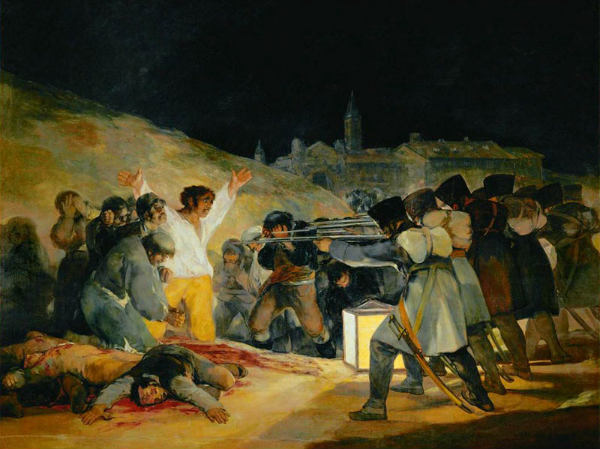
Goya painted the most varied subjects. His religious frescoes are parodies of Tiepolo. Beautiful women look down coquettishly from the ceiling and angels, with challenging laughter display their legs. His portraits of maidens, especially the celebrated double picture of the clothed and nude Maja, belong to the finest studies of the century. In other pictures he has depicted with powerful brushwork scenes from popular life: processions, bull-fights, beggars, and brigades. But however seductive he may be when charmed by his model, he is a weary painter. His commissioned portraits of the wealthy are rapidly observed and rapidly executed, without passion and drama. Goya is a revolutions, an agitator, a nihilist. Even in his portraits of the royal family these opinions are betrayed. He seems to laugh over the pompous nothingness that stood before him, and to be chagrined at having to paint the noble ladies and gentleman is such solemn poses, instead of letting them deport themselves and jump over balustrades as did his angles. Many of his paintings have a soul searing quality. This son of a revolutionary age deprived the poor princes who are his sitters of the talisman of majesty and displayed them stripped before the eye of the world.
His etchings reveal the true Goya. Only is such prints, and a few of his oil paintings, could his wild fire, his harsh, stormy spirit find expression. A mad uncanny fantasy is everywhere revealed. Witches ride upon broomsticks and white cats; woman tear out the teeth of executed criminals; robbers scuffle with demons and dwarfs. A dead man arises from the grave and writes with his finger the word Nada. But the prevailing note is a hatred of tyrants. Nothing which had formerly been considered authority escapes his scorn. In Capriccios he attacks with raving fury the kings and magnates, and scoffs at the priests robe concealing human passions. In Los desastres de la guerra (The Disasters of War) he contrasts the military glory which his predecessors had celebrated with the blood ruin which is the price of glory. Everywhere he struggles with cutting away irony, against despotism and hypocrisy, against the vanity of the great and the servility of the small; heaping all vices of the time into a horrible hecatomb. In his works there sounds the suppressed rumblings of the revolution whose crater had in the meanwhile opened.
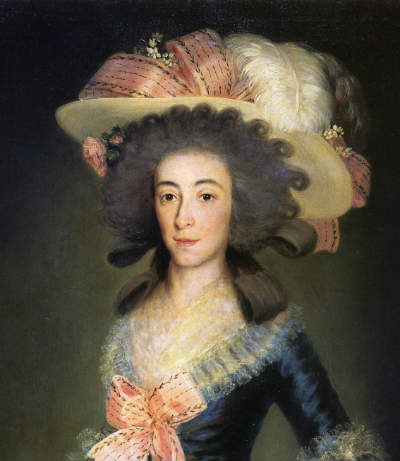
María Josefa Pimentel, Duchess of Osuna by Francisco Goya
Francisco Goya Quotations
Fantasy, abandoned by reason, produces impossible
monsters; united with it, she is the mother of the arts and the origin
of marvels. --Francisco Goya Quote
The act of painting is about one heart telling another heart where he
found salvation ~ Francisco Goya Quote
The object of my work is to report the actuality of events. ~ Francisco
Goya Quote
My work is very simple. My art reveals idealism and truth. ~ Francisco
Goya Quote
© HistoryofPainters.com If you like this page and wish to share it, you are welcome to link to it, with our thanks.