Jean-Baptiste Simeon Chardin
1699-1779
French Realist Genre Painter
Studied under Pierre Jacques Cazes
Chardin
created art that is thoughtful,
appealing,
serene, and that resonated both intellectually and emotionally with
18th century viewers. His paintings do not require an elaborate
explanation to make them understandable. Chardin once stated "Who told
you that one paints with colors? One makes use of colors, but one
paints with emotions.”
Chardin's style reveals a taste for what is charming and elegant. He specialized in still-lifes and genre scenes with inspiring moral themes set in bourgeois households. The painter lived during a time of political unrest and social upheaval. The impoverished French masses were tired of supporting an ineffectual monarchy and self-serving nobility. Distinguished author and historian, John C. Van Dyke points out "Chardin clung to portrayals of humble life and sought to popularize the genre subject. Chardin was not appreciated by the masses. His frank realism, his absolute sincerity of purpose, his play of light and its effect upon color, and his charming handling of textures were comparatively unnoticed. Yet as a colorist he may be ranked second to none in French art, and in freshness of handling his work is a model for present-day painters. Diderot early recognized Chardin's excellence, and many artists since his day have admired his pictures; but he is not now a well-known or popular painter."
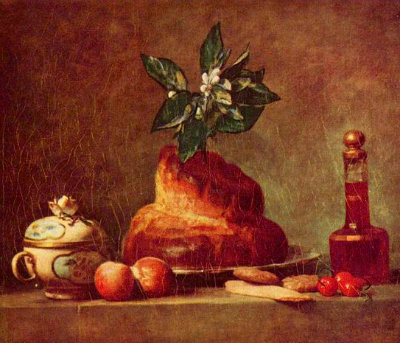
Europe was torn asunder by the French Revolution and later the Napoleonic Wars. The world was in transition. The old social order imposed by greedy monarchs and enforced by corrupt clergymen was buckling under freedom of the press and an intellectual movement called "The Enlightenment". The first French Encyclopedia was printed. People were becoming curious about modern science, art and philosophy. France, Chardin's birth place, was an enchanting land of green meadows, vineyards, wine, rich cheeses, beautiful architecture, magnificent art and literature.
©
HistoryofPainters.com If you like this page and wish to share it, you
are welcome to link to it, with our thanks.
If you feel you have worthwhile information you would like to contribute we would love to hear from you. We collect essential biographical information and artist quotes from folks all over the globe and appreciate your participation. When submitting please, if possible, site the source and provide English translation. Email to millardmulch@gmail.com
| l |
|
|
|
|
A painter should begin every canvas with a wash of black, because all things in nature are dark except where exposed by the light. Leonardo da Vinci
I dream my painting and I paint my dream. Vincent Van Gogh
I shut my eyes in order to see. Paul Gauguin
The painter has the Universe in his mind and hands. Leonardo da Vinci
Art is not what you see, but what you make others see. Edgar Degas
Absinthe is the only decent drink that suits an artist. Paul Gauguin
Color is my daylong obsession, joy, and torment. Claude Monet
Painting is poetry that is seen rather than felt, and poetry is painting that is felt rather than seen. Leonardo da Vinci
Art is either revolution or plagiarism. Paul Gauguin
I saw the angel in the marble and carved until I set him free. Michelangelo
iconography
100 greatest paintings
illuminated manuscripts
artist biographies
medieval art
renaissance art