Pompeo Batoni
1708-1787
Romantic Italian Rococo Painter
Stylistically
Influenced by the following Painters:
Canaletto
and
Raphael
Cause of Death - Fever
Batoni was renown for his allegorical and mythological paintings
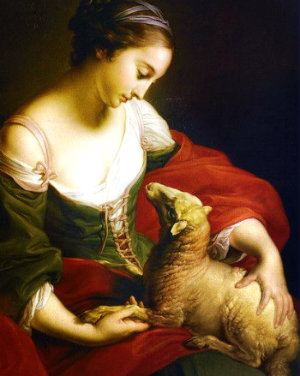
Rocco paintings feature beautiful aristocrats decked out in velvet, elegant laces and rich golden embroideries. The figures are tall and willowy, stylish and charming. The faces are presented as soft and rosy, effeminate and eternally young. Noblemen are depicted wearing feminine coiffeurs, rouged lips and cheeks, often sporting high heels. The Rocco female figures are delicate and light; the faces, are childish and sentimental. The lines of the mouth curve in soft mischief or in a delicate enchanting smile.
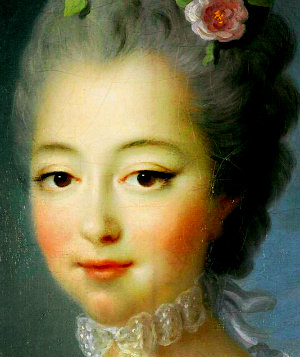 Characteristic of Rococo art was paintings of carefree aristocrats at
play in make-believe settings. These romantic scenes depict luxuriously
costumed ladies and gentlemen flirting, picnicking and playing music at
gallant country parties. The background scenery is often a
serene
natural setting with delicate trees and sprays of roses. Colors are a
profusion of soothing, light pastels. The Rococo movement was initially
restricted to France, later spreading to all of Europe and above all to
Italy. The movement continued to develop until the arrival of
Neoclassicism
which attempted to return to the purism of
classical
antiquity.
Characteristic of Rococo art was paintings of carefree aristocrats at
play in make-believe settings. These romantic scenes depict luxuriously
costumed ladies and gentlemen flirting, picnicking and playing music at
gallant country parties. The background scenery is often a
serene
natural setting with delicate trees and sprays of roses. Colors are a
profusion of soothing, light pastels. The Rococo movement was initially
restricted to France, later spreading to all of Europe and above all to
Italy. The movement continued to develop until the arrival of
Neoclassicism
which attempted to return to the purism of
classical
antiquity.
Bernardo Bellotto Italian,1720-1780
Francois Boucher French, 1703-1770
Canaletto Italian, 1697-1768
Jean-Baptiste Simeon Chardin French, 1699-1779
Jean-Honoré Fragonard French, 1732-1806
Thomas Gainsborough English, 1727-1823
Francisco de Goya Spanish, 1746-1828
Thomas Hudson English,1701-1779
Jean-Marc Nattier French, 1685-1766
Joshua Reynolds English, 1723-1792
Paul Sandby English, 1730-1809
Jean Antoine Watteau French, 1684-1721
©
HistoryofPainters.com If you like this page and wish to share it, you
are welcome to link to it, with our thanks.
If you feel you have worthwhile information you would like to contribute we would love to hear from you. We collect essential biographical information and artist quotes from folks all over the globe and appreciate your participation. When submitting please, if possible, site the source and provide English translation. Email to millardmulch@gmail.com
| l |
|
|
|
|
A painter should begin every canvas with a wash of black, because all things in nature are dark except where exposed by the light. Leonardo da Vinci
I dream my painting and I paint my dream. Vincent Van Gogh
I shut my eyes in order to see. Paul Gauguin
The painter has the Universe in his mind and hands. Leonardo da Vinci
Art is not what you see, but what you make others see. Edgar Degas
Absinthe is the only decent drink that suits an artist. Paul Gauguin
Color is my daylong obsession, joy, and torment. Claude Monet
Painting is poetry that is seen rather than felt, and poetry is painting that is felt rather than seen. Leonardo da Vinci
Art is either revolution or plagiarism. Paul Gauguin
I saw the angel in the marble and carved until I set him free. Michelangelo
top 50
painters
iconography
100 greatest paintings
illuminated manuscripts
artist biographies
medieval art
renaissance art
iconography
100 greatest paintings
illuminated manuscripts
artist biographies
medieval art
renaissance art